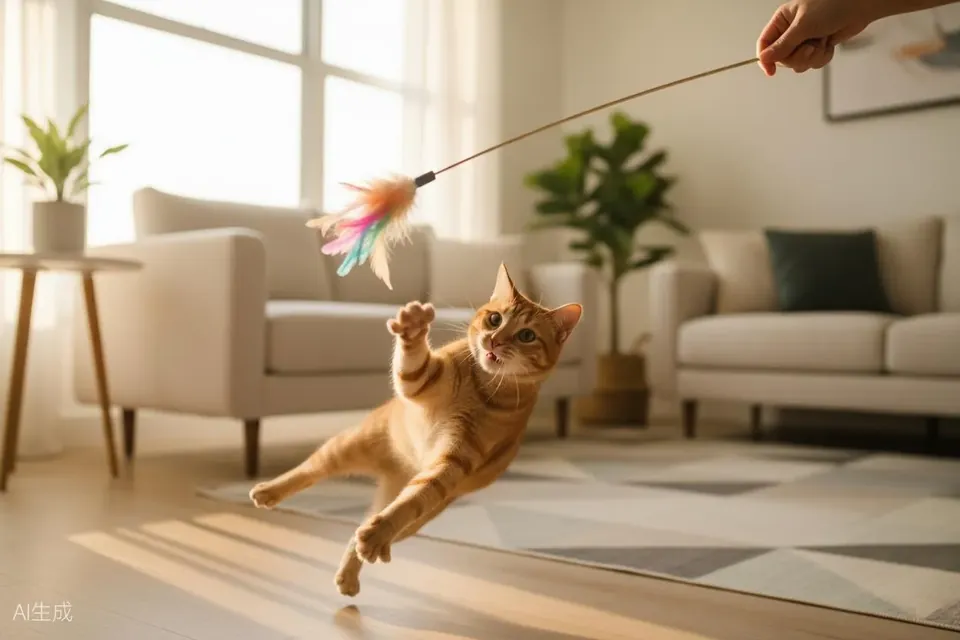
A cat ignoring a new toy does not mean the cat dislikes play. The movement may be wrong, the sound may be unsettling or the toy may not suit the cat's body. The most reliable buying signal is the behaviour your cat already shows.
- Identify prey preference.
- Match the toy to play style.
- Adjust for age and mobility.
- Choose the right level of interaction.
- Run a safety check.
- Test cheaply before buying more.
- Rotate and inspect toys.
The AAFP and ISFM Environmental Needs Guidelines recommend opportunities for play and predatory behaviour. Good play lets a cat stalk, chase, pounce and sometimes complete the sequence by catching the toy.
Step 1: Identify your cat's prey preference
Start by testing movement instead of product categories. The Ohio State University Indoor Pet Initiative suggests observing whether a cat responds most to bird-like movement in the air, mouse-like movement along the ground or small bug-like movement with quick, irregular pauses.
- Move a wand lure through the air, then pause.
- Drag a soft toy low along the floor and behind furniture.
- Use a small toy with brief, unpredictable movement.
- Watch for staring, crouching, tail movement, stalking, swatting and pouncing.
Repeat on different days. One sleepy session is not enough to label a preference. Once you know the likely movement style, compare our best toy types for indoor cats.

Step 2: Match the toy to how your cat plays
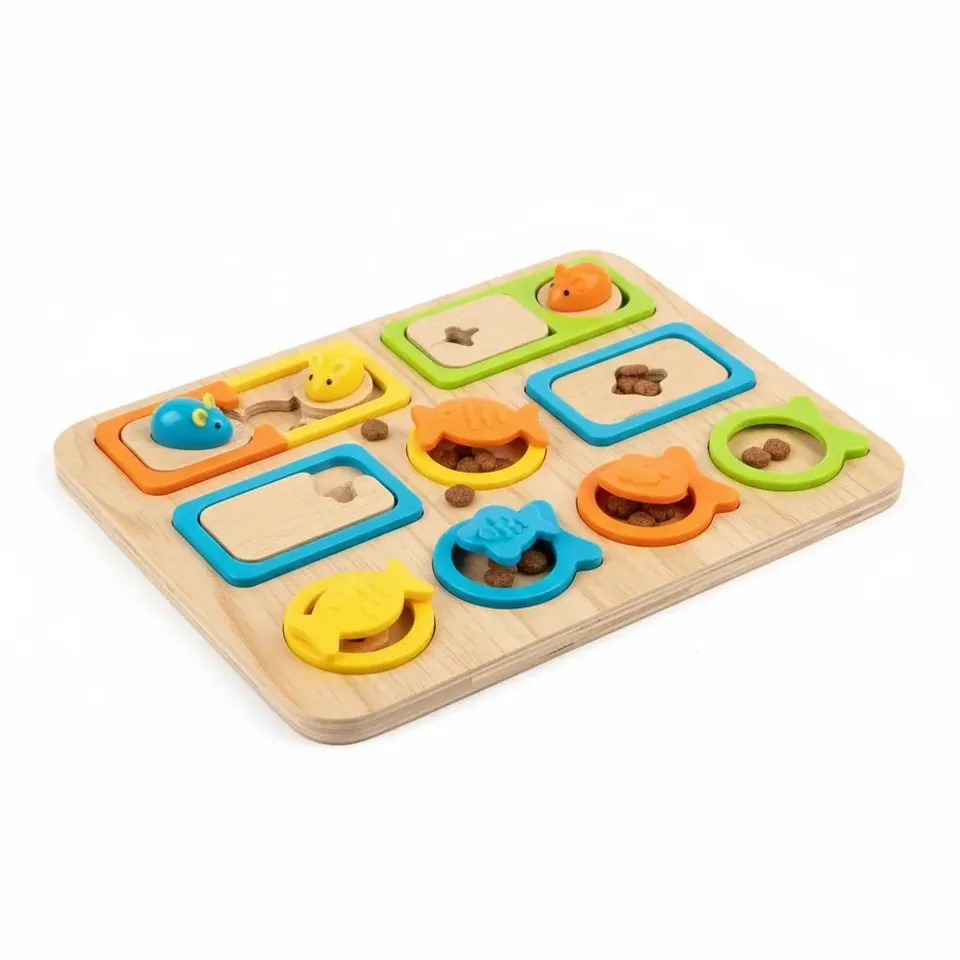
Different behaviours point toward different tools. A chaser may enjoy balls or low-moving toys. A pouncer may prefer a wand that disappears behind a chair. A cat that grabs and kicks needs a larger, durable kicker. A food-focused cat may engage with an easy puzzle feeder.
| Observed behaviour | Try first | Watch for |
|---|---|---|
| Tracks birds or airborne movement | Caregiver-led wand toy | Loose feathers or cord damage |
| Ambushes low targets | Soft mouse or floor lure | Parts small enough to swallow |
| Grabs and hind-leg kicks | Large kicker toy | Open seams or exposed filling |
| Works hardest for food | Easy puzzle feeder | Frustration and excess food |
| Prefers quiet solo play | Track ball or sturdy soft ball | Cracks, bells and loose caps |
These are starting points, not personality labels. Many cats switch styles during one session.
Step 3: Choose for age and physical ability
Kittens often enjoy rapid movement, but they also chew and investigate parts closely. Choose lightweight, durable toys without swallowable decorations. Never teach a kitten that hands and feet are prey. Use a longer toy that keeps teeth and claws away from skin.
Adult cats still benefit from varied play. For senior cats or cats with reduced mobility, move toys slowly at floor level on a non-slip surface. International Cat Care's Cat Caregiver Guide to Home Modifications recommends adapting the home and activity around the cat's physical ability.
A cat that suddenly stops playing, avoids jumping or appears stiff may be uncomfortable. Pause intense play and consult a veterinarian rather than trying to solve the change with a new toy.
Step 4: Decide between shared, solo and puzzle play
Caregiver-led toys provide precise movement and shared attention. Solo toys remain available when you are occupied. Puzzle feeders connect manipulation with food. None is universally superior, and most homes benefit from a combination.
| Type | Best for | Main limitation |
|---|---|---|
| Caregiver-led interactive | Controlled hunting play and bonding | Requires active supervision |
| Solo | Short independent play | Must be checked for swallowing risks |
| Puzzle feeder | Food-seeking and problem-solving | Food counts toward daily intake |
| Automatic | Adding movement variety | Noise, batteries and moving parts |
If you are deciding between a powered toy and a simple ball or wand, read our guide to interactive versus traditional cat toys.
Step 5: Run a safety check before you buy
Cornell's Safe toys and gifts guidance highlights risks from small parts, string-like materials, feathers and electrical cords. Check the actual object rather than relying only on the packaging.
- Can an eye, bell, feather or cap be pulled off?
- Can the entire toy fit into the cat's mouth?
- Will biting expose a sharp edge or filling?
- Is a battery compartment secured with more than a loose snap cover?
- Can the surface be cleaned and dried?
- Does the toy require supervision every time?
- Is the play area free from unstable objects and unsafe drops?
Remove a toy immediately if cord, stuffing or internal parts become visible. If you suspect your cat swallowed string or another foreign object, contact a veterinarian.
Step 6: Test before buying more
Use safe household items to test preferences. A cardboard box can reveal an interest in hiding and ambush. A crumpled paper ball can test ground chasing. Cornell notes that simple objects can provide entertainment, so a high price is not evidence that a cat will engage.
Look for repeat behaviour: does the cat return, track the toy after a pause or search where it disappeared? Keep sessions short and allow the cat to leave. If the response is weak, change movement, sound, location or time before buying a more elaborate version.
Step 7: Rotate and use toys correctly
Keep a few safe toys available and store the rest. Rotate when interest declines, but do not follow a rigid schedule. Change one variable at a time so you learn whether movement, texture or location made the difference.
End hunting-style play with a catch. Store strings and wands. In multi-cat homes, provide separate locations and watch for one cat blocking another. Food placed in a puzzle must be included in the cat's normal daily intake.
What if your cat still ignores every toy?
Lower the speed and sound, try a different time of day and begin food puzzles at the easiest setting. Some cats prefer watching before joining. Persistent withdrawal, reduced jumping, limping or a clear behaviour change deserves veterinary attention.
Frequently asked questions
Why does my cat ignore expensive toys?
Price does not determine whether movement, texture or sound matches a cat's preferences. Test simple bird-like, mouse-like and bug-like movements before buying more.
Are automatic toys better than simple toys?
Not universally. Automatic toys can add variety, while simple balls, boxes and caregiver-led wand play support other useful behaviours. A mixed rotation is usually more practical.
What toys are suitable for senior cats?
Use slower, low-level movement on a non-slip surface. Let the cat choose whether to continue, and speak with a veterinarian if willingness to play or move changes suddenly.